
Choosing a hardwood floor for a York Mills home is not only about colour. The structure of the flooring, the subfloor below it, moisture conditions, plank dimensions, installation method, and long-term maintenance all influence how the finished floor will look and perform.
Engineered hardwood flooring has become a popular premium option because it combines a genuine wood surface with a layered core designed to improve dimensional stability. This makes it suitable for many renovation and new-flooring projects where homeowners want the character of real wood with more installation flexibility than traditional solid hardwood.
For elegant homes in York Mills, engineered hardwood can work particularly well in living rooms, dining spaces, bedrooms, hallways, home offices, and open-concept interiors where appearance and long-term value both matter.
Venus Flooring currently offers a broad selection of engineered wood flooring with more than 200 listed options, giving homeowners a wide range of natural, grey, warm, dark, oak, ash, birch, and walnut-inspired finishes to compare.
Table of Contents
- What Is Engineered Hardwood Flooring?
- How Engineered Hardwood Is Built
- Why Engineered Hardwood Works Well in York Mills Homes
- Engineered Hardwood vs Solid Hardwood Flooring
- Engineered Hardwood vs Laminate
- Engineered Hardwood vs Vinyl Plank
- Floating, Click, Glue-Down and Nail-Down Installation
- Engineered Hardwood Underlayment and Adhesive
- Can Engineered Hardwood Be Refinished?
- Is Engineered Hardwood Waterproof?
- How Much Does Engineered Hardwood Flooring Cost?
- Best Rooms for Engineered Hardwood
- Featured Engineered Hardwood Products
- How Professional Installation Works
- How to Choose the Best Engineered Hardwood Flooring
- Frequently Asked Questions
- Final Thoughts
What Is Engineered Hardwood Flooring?
Engineered hardwood flooring is a real-wood flooring product built in layers. The top surface is genuine hardwood, while the supporting layers underneath are engineered to provide greater structural stability.
This layered construction is the main difference between engineered hardwood and traditional solid hardwood.
Engineered hardwood floors can provide:
- A real hardwood surface
- Improved dimensional stability
- A wide choice of wood species and finishes
- Multiple installation options depending on the product
- Suitability for a wider range of subfloors
- A premium appearance for residential interiors
The terms engineered wood flooring, engineered flooring, and engineered timber flooring are often used to describe similar layered wood-flooring systems, although exact construction varies by manufacturer.
How Engineered Hardwood Is Built
The visible layer is the hardwood veneer or wear layer. Beneath it is a core made from engineered wood materials arranged to improve stability.
Important product specifications can include:
- Wear-layer thickness
- Overall plank thickness
- Plank width and length
- Wood species
- Finish
- Edge profile
- Installation method
For example, Ash Natural 2mm – 6 Inch Engineered Hardwood is listed with a 2mm ash veneer and a 6-1/2-inch specification, illustrating why veneer thickness and plank construction should be reviewed before buying.
Why Engineered Hardwood Works Well in York Mills Homes
York Mills homes often feature large rooms, custom interiors, open sightlines, and premium finishes. Engineered hardwood can complement these spaces because it offers genuine wood character while providing more dimensional stability than many traditional solid-wood installations.
It can be a strong choice for:
- Formal living rooms
- Dining rooms
- Bedrooms
- Hallways
- Home offices
- Open-concept main floors
- Renovated interiors with existing subfloor constraints
For luxury interiors, plank width, grain variation, colour, and finish should be considered together so the floor supports the architecture instead of competing with it.
Engineered Hardwood vs Solid Hardwood Flooring
Engineered hardwood vs solid hardwood flooring is one of the most important comparisons homeowners make.
Engineered Hardwood
- Layered construction with a real hardwood surface
- Generally improved dimensional stability
- Can offer more installation flexibility
- Often considered for concrete or areas where solid hardwood is less practical
- Refinishing potential depends on the wear layer
Solid Hardwood
- Made from one piece of wood
- Traditionally nailed or stapled to a suitable wood subfloor
- Can often be refinished multiple times depending on thickness and condition
- More responsive to seasonal humidity changes
For a full comparison, read Venus Flooring’s engineered hardwood vs solid hardwood flooring guide or browse the solid hardwood flooring collection.
Engineered Hardwood vs Laminate
Engineered hardwood and laminate can look similar from a distance, but the materials are different.
Engineered hardwood uses real wood on the visible surface, while laminate uses a decorative image layer designed to reproduce the appearance of wood.
When comparing engineered hardwood vs laminate, consider:
- Real wood vs printed decorative surface
- Budget
- Refinishing potential
- Moisture performance
- Installation system
- Long-term appearance
Homeowners comparing both materials can also explore the laminated flooring collection.
Engineered Hardwood vs Vinyl Plank
Engineered hardwood vs vinyl plank is another common comparison, especially for homeowners balancing natural materials with moisture resistance.
Engineered hardwood offers a genuine wood surface, while luxury vinyl plank is a synthetic flooring system designed to replicate wood while generally offering stronger resistance to water.
Vinyl may be more practical in moisture-prone areas, while engineered hardwood is often chosen where natural wood appearance and premium material value are priorities.
Compare the current vinyl flooring collection if waterproof performance is a major requirement.
Floating, Click, Glue-Down and Nail-Down Installation
One advantage of engineered hardwood flooring is that different products may support different installation methods.
Floating Engineered Hardwood
A floating engineered hardwood floor is installed without fastening every plank directly to the subfloor. The planks connect to one another and sit over an approved underlayment.
Engineered Hardwood Click Flooring
Click systems use locking edges that join planks together. They can simplify installation, but the subfloor still needs to be flat, clean, and suitable for the flooring system.
Glue-Down Installation
Glue-down installations use an approved engineered hardwood adhesive to bond the flooring to the prepared subfloor. Adhesive choice, moisture testing, and subfloor preparation are critical.
Nail-Down or Staple-Down Installation
Some engineered wood floors can be nailed or stapled to a suitable wood subfloor. The correct method depends on the specific product.
Engineered Hardwood Underlayment and Adhesive
Engineered hardwood underlayment is not a one-size-fits-all product. The correct system depends on the installation method, subfloor, sound requirements, moisture conditions, and manufacturer instructions.
For floating installations, underlayment may help with:
- Sound reduction
- Minor subfloor irregularities
- Moisture management when approved
- Underfoot comfort
For glue-down installations, use only an adhesive approved for the flooring and subfloor conditions.
Can Engineered Hardwood Be Refinished?
Engineered hardwood refinishing depends mainly on the thickness of the real-wood wear layer.
A thicker veneer may allow sanding and refinishing, while a very thin surface layer may allow only limited restoration or none at all.
Before refinishing, confirm:
- Wear-layer thickness
- Previous sanding history
- Floor condition
- Manufacturer recommendations
Is Engineered Hardwood Waterproof?
Engineered hardwood flooring is not automatically waterproof.
Its layered construction can provide better dimensional stability than solid hardwood, but water can still damage the wood surface, joints, core, and subfloor if exposure is excessive.
For kitchens, entryways, or other areas where spills are possible, wipe moisture quickly and follow the product’s care instructions. For areas with frequent or standing water, waterproof vinyl or SPC may be more appropriate.
How Much Does Engineered Hardwood Flooring Cost?
Engineered hardwood flooring cost depends on the wood species, wear-layer thickness, plank dimensions, brand, finish, installation method, and site conditions.
The complete project budget may include:
- Flooring material
- Waste allowance
- Delivery
- Removal of existing flooring
- Subfloor preparation
- Underlayment or adhesive
- Installation labour
- Transitions and trim
- Staircase coordination
Current Venus Flooring engineered hardwood products are listed across a broad price range, so live pricing should be confirmed before ordering.
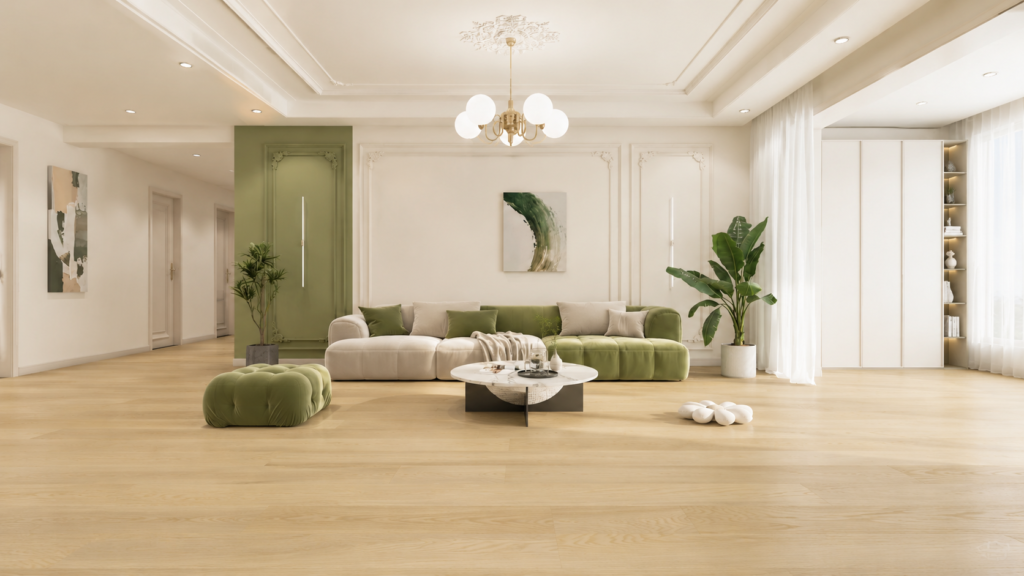
Best Rooms for Engineered Hardwood
Engineered hardwood is commonly considered for:
- Living rooms
- Dining rooms
- Bedrooms
- Hallways
- Home offices
- Open main-floor areas
Suitability for basements, concrete slabs, radiant heat, kitchens, or other special conditions depends on the exact product and installation system.
Featured Engineered Hardwood Products to Compare
With more than 200 listed engineered wood products, Venus Flooring offers a wide range of tones and wood species. These options provide useful references when comparing natural, grey, walnut, and warm wood looks.
Ash Natural 2mm – 6 Inch Engineered Hardwood
View Ash Natural 2mm – 6 Inch Engineered Hardwood. A natural ash option with a listed 2mm ash veneer, useful for homeowners seeking a lighter real-wood appearance.
Birch Nature | Engineered Wood
View Birch Nature | Engineered Wood. A lighter birch-inspired option that can work well in bright, refined interiors.
Black Walnut Natural | Engineered Wood
View Black Walnut Natural | Engineered Wood. A deeper walnut option for homeowners looking for richer colour and a more dramatic premium finish.
Crest Grey | Engineered Wood
View Crest Grey | Engineered Wood. A grey-toned option suited to contemporary interiors and cooler design palettes.
Day Break | Engineered Wood
View Day Break | Engineered Wood. A versatile engineered wood option worth comparing for open living spaces and modern residential interiors.
How Professional Installation Works
Professional installation should begin before the first plank is opened.
A proper process may include:
- Site measurement
- Product selection
- Subfloor assessment
- Moisture testing where required
- Acclimation according to product requirements
- Installation-method selection
- Layout planning
- Expansion and transition planning
- Final finishing and inspection
Venus Flooring also maintains an Engineered Wood with Free Installation section for qualifying products and applicable project terms.
How to Choose the Best Engineered Hardwood Flooring
The best engineered hardwood flooring is the product that matches the room, subfloor, visual goals, installation method, and long-term expectations.
1. Choose the Wood Look
Compare ash, birch, oak, walnut, grey, warm, and natural tones in the actual room.
2. Check the Wear Layer
A thicker real-wood surface may offer greater long-term refinishing flexibility.
3. Confirm the Installation Method
Do not assume every engineered floor can be floated, clicked, glued, or nailed. Check the specific product.
4. Review Moisture Conditions
Concrete, basements, kitchens, and other moisture-sensitive locations require additional planning.
5. Compare the Complete Installed Cost
Product price alone does not include preparation, underlayment, adhesive, labour, transitions, and removal.
6. Use Samples Before Ordering
Natural light, furniture, cabinetry, and wall colours can change how a wood tone appears in a York Mills home.
FAQs
Final Thoughts
Engineered hardwood flooring offers a strong balance between natural wood appearance, dimensional stability, and installation flexibility.
For York Mills homes, the best result comes from comparing the floor as part of the complete interior. Wood tone, plank width, wear layer, subfloor, installation method, stairs, cabinetry, and lighting should all be considered together.
Whether you prefer natural ash, birch, rich walnut, grey tones, or another premium wood finish, physical samples and professional site assessment can make the final decision much easier.
Explore Engineered Hardwood Flooring at Venus FlooringContact Venus Flooring to discuss samples, measurements, flooring selection, and professional installation for your York Mills project.